By Bashir Bello
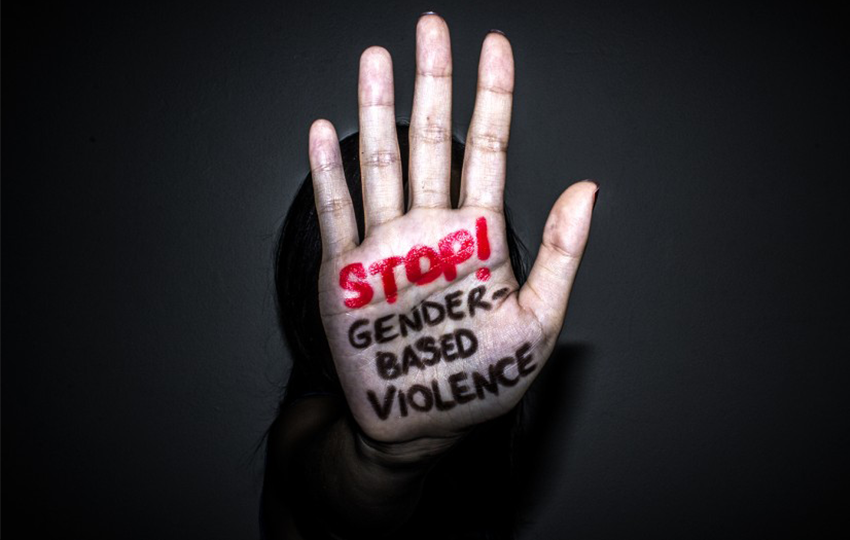
KANO — Worried by the rampant cases of Sexual Gender Based Violence, SGBV in Kano, a Non Governmental Organization, BAOBA for Women’s Human Rights has joined calls for the speedy passage of the Violence Against Persons Prohibition, VAPP act in the state.
The Executive Director, Bunmi Dipo-Salami while speaking during a 2-day capacity enhancement workshop for First Responders to Gender-Based Violence in Kano, said the need for the VAPP act became imperative to better the lives and protect the rights of the women, girls among others.
Dipo-Salami decried that Kano is yet to pass the VAPP act into law in the state and that which made the persons prone to violence.
According to her, “it is a workshop aimed at enhancing their understanding and fostering synergy among the stakeholders. It is to support the work they are doing in preventing SGBV in Kano.
“We are looking at the Violence Against Persons Prohibition, VAPP Act. It is in place in Bauchi and Jigawa but it is not yet in place in Kano. We are trying to see what are the issues and challenges. How best can we address these issues because at the end of the day when the lives of the women and girls are better, the society will be better.
“The issues around SGBV in Nigeria are multifaceted, with factors ranging from culture to religion and the lack of a strong justice system. Even with the cocktail of laws and policies informed by constitutional provisions as well as international and regional human rights covenants and agreements, women and children, especially girls, are at the receiving end of SGBV. Although women and girls across Nigeria are affected disproportionately by SGBV, communal/livelihood conflicts between herders and farmers; the Boko Haram insurgency; internal and cross-border banditry; and the COVID-19 pandemic have increased the risk of SGBV among other complications for women and children in Northern Nigeria. Similarly, various socio-cultural norms produce and reinforce gender inequality and stereotypical gender roles that underpin SGBV.
“The Violence Against Persons Prohibition Act was enacted in 2015 to “eliminate violence in private and public life, prohibit all forms of violence against persons and to provide maximum protection and effective remedies for victims and punishment of offenders; and for other related matters.”
However, the Act which is considered the most comprehensive and progressive law for addressing the silent pandemic of violence against women and girls in Nigeria does not have universal coverage as it does not have the force of law in two (2) out of the 36 States, six (6) of which are in Northern Nigeria where it is sometimes believed that the Act is incompatible with Muslim laws. Moreover, women’s rights continue to be violated even in those states where the Act has been adopted due to lack of political will, ignorance, discriminatory cultural norms, and practices, (mis) interpretation of the major religions.
“Various states across Nigeria have continued to domesticate and implement the VAPP Act to stem the tide of sexual and gender-based violence and this has continued to build momentum across the country.
There are however states that are still very hesitant to domesticate or implement the Act. With the momentum of domestication still at a high, this provides the perfect opportunity for sensitization, advocacy, strategic dialogues, and awareness creation on the necessity to popularize and implement the VAPP law where it has been adopted. Although two of the project states – Bauchi and Jigawa have domesticated the Act, it is yet to be implemented as some provisions of the law are culturally insensitive even after domestication. According to findings from the national research, the Bauchi State VAPP law which was assented to by the Governor in 2020 was represented for amendment in 2021 to address some of the inconsistencies in the domestication process.
“However, at the end of the capacity enhancement workshop, it is expected that we would increased number of women and girls in northern Nigeria who have access to justice and freedom from SGBV. We would enhance their knowledge on how to use the VAPP act to curb SGBV in Northern Nigeria as well as increase their knowledge on transformative leadership and advocacy channeled towards improving women’s inclusion, eliminate violence against women, protect girls from early marriage, etc,” Dipo-Salami however stated.
Meanwhile, it was gathered that similar engagement was earlier held in Bauchi and Jigawa States.
Disclaimer
Comments expressed here do not reflect the opinions of Vanguard newspapers or any employee thereof.