By Biodun Busari
It is no longer news that Nigerians are excelling in various fields in Diaspora. For many, it has been beautiful stories of, from grass to grace, and Yetti Tabai, is one of such thousands of Nigerian nationals that are making waves in foreign countries.
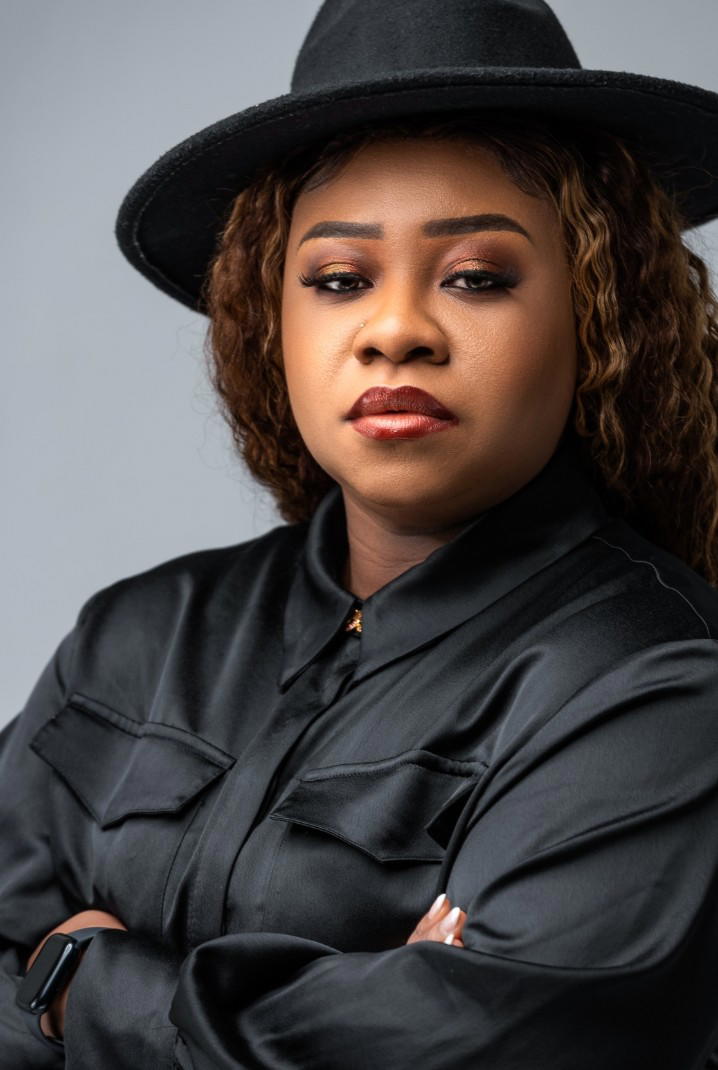
Nigerian-born Yetti Tabai, in an exclusive interview with Vanguard correspondent BIODUN BUSARI, revealed her frustrating, humble beginning as a teenager to becoming a successful UK-based lawyer, business analyst, IT guru, music artiste and foodprenuer with two restaurants.
Below are excerpts:
When did you leave Nigeria for the UK? What inspired you to leave?
I left Nigeria probably 2002 as soon as I finished my SS3 education at FESTAC College, in FESTAC Town, Lagos, Nigeria. I was pretty young when I got into secondary school. I was the youngest to be in JSS1. This was so because from primary 3, I did my common entrance exam and went to JSS1. So, I was super tiny than almost everybody in my secondary school. By default, I got finished very young from my secondary school, and younger than most people in my class. I finished secondary school very young like around 14. I was very excited at finishing school. So, at the age of 14, I came over to the UK to continue with my university education only to be told that at 14, I couldn’t go to the university. I needed to go back to SS3 which was year 11 over here in the UK. And that was the beginning of my disappointment.

What are the good things you can point at as your achievements since you relocated to the UK?
I can tell you that I have achieved a lot. I’ve got to organise my life. You know what to expect when the systems are working around you. And, of course, you have some hiccups here and there. But, when you have hiccups, there are complaints procedures around, that you can rely on to make sure that you get the service that you have been promised. Where there are hiccups, there are laws or organisational structures that you can rely on, which I think Nigeria can improve on.
Will you say the experience has been good with school, job, family and life in general?
Of course, I started on a bad note where I had to go back to SS3 which was year 11 in the UK. That meant I had to go back to all that I had finished in school in Nigeria, and that was not really good for my mental health. And after that, I was hoping I would be able to go to the university but I was told I needed to do my A levels. So, I had A levels for another two years. By the time I finished my A levels at the end of two years, lo and behold, my mates that we finished secondary school together had graduated from the university, when I was about entering into the university.
What seemed like a system that couldn’t work in Nigeria because of backwardness that I thought actually ended up better than here. I tell you what, the educational system here is really rigid. But, now I know better. Like the saying, knowledge is wealth. I never knew I could have applied for an exemption to proceed to the university even when I was at the age of 14. I currently home school my children, now I know better about the UK educational system.
During the extra time studying, I got better in organising my life and expectations. I got to understand discipline. I understood professionalism and all of that. A lot of good things were achieved. I got to understand savings, business etc.
After your secondary school, what was university education like?
I studied Law and International Relations at London Metropolitan University and I graduated about 2008/2009. I studied Law because my grandparents wanted me to and it is a passion for me. But, as soon as I finished my university education, I realised that the kind of money that lawyers made after graduation and internship and all that wasn’t the kind of money I was looking for. And the career progression till the age of 40, did not meet my expectations, salary wise. So I had to think of a different path.
What career path did you choose and how did you go about it?
When I did my research, I realised IT would fetch more money with immediate effect than law. And the money in IT career path could give more than what was in Law at that time, so immediately I signed up for a software tester course. I did work at the carphone warehouse. So, while working at the carphone warehouse, I was studying a software tester course. After the course, I applied for jobs.
I think the software tester job was paying £200 per day back then. I started my IT job probably a year after finishing. So £200 per day in IT for me was very high at that time because the kind of money I would be earning if I chose Law.
Don’t forget that it was even 2009, and I could not even earn what top lawyers were earning. And top lawyers were not coming home with what I earned in IT. So, you could see where I was coming from, and I was thinking of how to get it right. And after that, I then moved on to be a business analyst. And of course, that increased my pay to more than £200 per day. I then moved on, took more qualifications and got more pay working as a Scrum Master.
I have to mention that, before doing all these white-collar jobs, I had to do some dirty jobs which nobody in society wants to do. I used to work as a cleaner when I was in the university. I worked at McDonald’s, Nando’s, party entertainer, dressing up as a clown etc. I would go and do night jobs from 4:00 am where they would pay me £7 an hour. I did a lot of odd jobs to raise my school fees, as I was refused a student loan. I could tell you that my university years were very rough with these menial jobs cleaning toilets, and offices, at McDonald’s and Nando’s etc. I had to work 12 hours everyday and still complete a full time degree. I would work 12 noon till midnight, then I would ride my bicycle for one hour to my house. Because I could not afford a bus pass.
I had to work for three months and save money to buy that bicycle. I think the bicycle cost £70. I used these menial jobs to pay my school fees, rent and all other expenses. I was living on £1 per day, and that meant I wouldn’t have breakfast and dinner. I would have to wait till 3pm or 4 pm. I would have to go and buy a combo box meal. It would include 2 pieces of chicken with chips and no drink, and went to the school taps and drink water. These were the paths I took to get my success destination. They were painful sacrifices. But in the middle of this, as life happens, I made sure what I was doing made me happy. It wasn’t about money anyway. I just wanted a sense of fulfilment.

One thing that gave me fulfilment is putting a smile on the faces of people. As I was going to office for my corporate job, I knew I wanted to do more. Then in 2013, after my IT job for four years. I set up a food delivery service from home, where I would cook from home and have the food delivered to my customers. You can do the same in the UK without certifications, but I wanted to do it the right way, so I got certified for this registering with the Food Standard Agency. They gave me a five star rating and I started selling food from home. I would cook for my business and also go to my IT job from 9 am to 5 pm. Then, the kitchen would open from 6 pm to 10 pm. That’s what I did from Monday to Sunday.
At a point I had to think of the option to pursue long term, IT was good and the food business also paid me well. The food business paid me about £100 per week. Later, I couldn’t marry the two jobs because of the hectic schedule, and I knew my passion was cooking and if I focused on the food business, it would give me more money and fulfilment. At a point, I gave up my cooking business and concentrated on my IT job because I had a budget on certain things I wanted to acheive.
Once more, I swapped to the food business which I started in Milton Keynes in 2013. It was originally, called ‘Come Chop With Me.’ Then, I moved to Manchester in 2018 and it is now called Yettis Kitchen. Yettis Kitchen currently has two branches, one is in Eccles Salford and the other in Printworks in Manchester city centre. When I started with one branch, I was the only member of the company seven days a week, 12 hours a day. But, God has been faithful. It has been five years that it was opened. And it was last year that we opened our second branch.
It’s been a story of growth, it’s been a story of hardwork. I’ve got a very supportive partner and my children are also supportive. That’s why I’ve been able to do business and have family at the same time. I’m able to also do music. I recorded my first single in 2018, and that was released under my music name – Yetti Tabai.
Ever since then, I’ve been releasing music every year. And this year, I will release my first track of 2022, called Hold Me Down. I release my first single called Shower in 2018, then the next called Perfect, Tife, and Beautiful Liar, all in 2022. Holy is my first single for 2023. Outside of my regular food and music business, I also build websites and have worked for some notable names.
What are societal and governmental incentives that are available for business in the UK?
There are jobs in the UK if you have the qualifications. I’m grateful that coming to the UK with whatever I had studied had paid off. Even before I switched my career, there were always jobs for me as a lawyer to pay my bills.
And of course, in terms of business, there are a lot of startups that help. There are a lot of grants, there are a lot of loans. There are a lot of business owners, working in your given sector who can help with advice. There are a lot of people who are willing to help you and hold your hand. And all that was amazing for me to know that I am being supported by the government and local councils.
Banks also help people in terms of business with loans. They work with you as a business owner and they discuss your business with you. They might not offer you money but by all means, they guide you in all directions.
I’m sure you know about Japa syndrome in Nigeria, what will you say about this?
This really saddens me. It really saddens my heart because here, the UK is bringing a lot of talents but the promises are really low. They are promising people with talents that don’t worry, come to the UK and there’s a job for you. But what you don’t realise is all the people you are coming to meet in the UK with your Ph.D, your Masters, most of them don’t value such qualifications and don’t even have such qualification.
When you apply for job, the person that will drill you may not even finish secondary school. And even they finish secondary school, might not have studied in the university. I’m not saying this happens in all organisations, but the value system in the Uk is different and it’s not all about your masters or your degree.
Having worked with a recruitment agency before, most CVs that I have come through from Nigerians will have the header of PhD, master or third degree on them. This can be intimidating for some employers. Imagine applying for a customer care job but you have all that qualification. This is just a call-out to Nigerians coming over here, that depending the company you are applying and the job role, you have to edit your work history. You don’t have to say that you are the CEO at Access Bank. You don’t have to say that you are the General Manager or mentioning all these big names on your CV all the time.
If you know that you are applying for the post of a General Manager, of course you have to put all that, to show that you have the experience. But you cannot be applying as a cleaner and saying you’ve got Masters and Ph.D. it doesn’t work well. That’s just my own piece of advice.
So, in terms of Japa syndrome, a lot of talents are being lost to Nigeria and adding to the UK economy. And when I say loss, I’m happy that the UK economy is booming with immigration and that people get the opportunity to come over here. Once upon a time, before Covid, it was fair and square. The talents that were coming here were actually getting opportunities.
Now, e don choke in terms of there are more talents that jobs available. Now, we are facing a very hard time for both the qualified and unqualified. There are many people who are on sponsored visas and the business that sponsored them to get here, are struggling to keep afloat, because the UK is also struggling with the cost of living crisis.
So, what I am saying is that Japa syndrome was beautiful before Covid but after Covid finished and the UK opened doors and borders for more talents to come, we have been facing a backlash with more talents than available jobs. But for Nigeria, I pray that the rightful person will be put to power and we actually getting amazing talents in Nigeria to remain in Nigeria and build Nigeria. Also by all means, I do hope the talents that are away from Nigeria will be able to return to build the Nigeria that we love to see.
My advice for those that want to japa is that do your research. We are amazing people and we have great tenacity as Nigerians and I believe we can survive in any climate. By all means, do your research, make sure the company you’re coming in to work for or the university you’re coming to study at, have accommodation on campus or locally, because there a shortage of accommodation in the UK.
What can Nigeria do to overcome unemployment and inadequate infrastructure to cure its economic adversity?
We just need to give ourselves a chance. We are amazing people. I’ve seen Nigerians over here thrive because of the structure that works. When you are here, Yahoo Yahoo (internet fraud) doesn’t come to mind immediately, and that tells you that we are really good.
When you get here, we have reliable electricity, and other infrastructures and these help us as Nigerians to thrive. And these are the things we need to do better in Nigeria. I read about that a lot of corrupt politicians are benefitting from the instability of electricity in Nigeria. But, on the flip side, imagine the people that will benefit if Nigeria had stable electricity.
So in summary, rather than blame the government every time, what can we do as individuals? This cannot only be for the government. We should ask what are doing for ourselves. There are many solutions, in Nigeria that people have tried and failed at as individuals. But there are some people who have been successful at the grass root level.
I’m just saying enough of bad news about Africa, enough of the bad news about Nigeria, enough of the bad news about structures that don’t work. And let’s begin to ask ourselves what can we do, rather than what can government do.
What kind of advice do you have for Nigerian government?
I hope the government in Nigeria could provide all these benefits for the people at home especially in the area of tech. if the government invests in its people and the systems.
We should be in the good books of international companies, where you can use your card in Nigeria for international payments. The UK has faced some economic hardships. And there are some opportunities in Nigeria. I’m saying this because a lot of my friends that have come back to Nigeria are investing. I have seen a lot of growth with Nigerian in terms of more people gaining international recognition in fashion, tech, and others.
And if you want to leave Nigeria, do, because everyone has their purpose and calling. But, don’t think that leaving Nigeria is the only purpose you have because you can be in Nigeria and flourish, you can also travel to the UK, and be poor.
There is no where in the world you can’t be poor and homeless, because that’s exactly what happened to me. That’s why I said every Nigerian can flourish, because we have learnt to survive in every environment. We are like roses that grow on concrete. I look forward to the kind of Nigeria that we all dream of, and this is why everybody gathered to vote hoping to get the best for the country in February 2023.
Disclaimer
Comments expressed here do not reflect the opinions of Vanguard newspapers or any employee thereof.