climate change
– A letter to Mr. incoming president
Written by James Afomareowan
I am writing to inform you about Climate Change and Nigeria’s Economic Development.
Growing up in Anyikang, a village under forest cover in Cross River State, my teachers taught us that climate change reflects the variations in a country’s average daily weather conditions over an extended period. They explained that climate change threatens economic development in sectors dependent on climatic conditions. “Climate change is real!” They always exclaimed.
It was in the early ’90s, and our teachers’ lessons made no meaning to me. Our rivers were deep and wide enough for us to swim in and for our fishermen to fish. We had clean and enough spring water for drinking. The rainfall was average and we experienced no floods or drought. Our livestock fed on fresh grass to grow, and their products served as protein to us. During the dry season, Fulani herders migrated to our villages with their livestock and went back during the rainy season. The grasses were enough for their animals who hardly fed on farmer’s crops. There were no farmers and herders clashes. The forest protected us from the harsh impact of the sun. It also served as a carbon sink for the carbon flared by oil-producing companies. The trees were many enough to fight against strong wind and kept us from airborne diseases.
During the post-independence era, due to favourable climatic conditions and good government policies, Nigeria had an enormous global market share in palm oil, cocoa, groundnut, and cotton. In the 1960s, Nigeria accounted for 42% (502,000 MT) of the world’s exports of shelled groundnuts. In 1961, Nigeria accounted for 27% (167,000 MT) of the global export volume for palm oil. The choices of the green colour in our national flag and the black shield in our coat of arms are evidence of the favourable climatic conditions we enjoyed as a nation. The Rivers Niger and Benue were famous for the economic benefits they brought to our country.
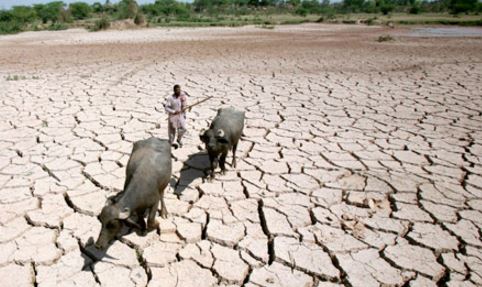
Sir, recently, I visited my village. Our rivers and source of drinking water have dried up. Our forest has become empty, and erosion has swept nearly 20% of our uppermost soil. The flood has wiped away houses, farmlands, and critical infrastructure. An economically viable community has been reduced to a begging community. A forest community has been exposed to the sun and carbon deposits. A once healthy population has suddenly become weak and sick.
Sir, from the realities in my village and verifiable data, the followings are the human causes of climate change in Nigeria: Industrial and Domestic Emission of Greenhouse Gases, Deforestation, and Bush Burning.
The consequences of climate change in our climate-dependent sectors are real. Below are these consequences:
- Food Shortage
- More Public Health Risks
- Poverty and Migration
- Loss of Species and Critical Infrastructure
- Scarcity of Water
- Reduction in Electric Power Supply
To address the effects of climate change, your predecessors came up with Nigeria’s Climate Change Policy. Its primary goal is to tackle the human causes of climate change in a multifaceted way. In 2017, Nigeria ratified the Paris Agreement. The Climate Change Act 2021 was also created. The National Council on Climate Change was inaugurated by President Muhammadu Buhari to formulate appropriate policies towards achieving green growth and sustainable economic development for Nigeria.
NIMET data for 2023 shows an increase in temperature and rainfall. According to NEMA, Nigerians should expect worse flooding in 2023. These are indications of worsening climatic conditions that will adversely affect the economy if no mitigation is in place. Below are some pragmatic adaptations to climate change in Nigeria that I will like your administration to adopt as its approach to mitigating climate change effects on Nigeria’s economic development:
- Your government should be intentional about Nigeria’s climate change and development.
- The clause in the gas law that permits oil companies to flare a certain amount of gas for a certain fine should be reconsidered. A more stringent law with stiffer gas-flaring penalties should be enacted. This will discourage flaring, create jobs and make gas available for domestic and international consumption.
- The Rivers Niger, Benue, and other rivers with tributaries into the Atlantic Ocean should be dredged. Holding dams should be built. This will solve the problem of flood and drought, create jobs, improve our health, and solve the farmers’ and herders’ crisis.
- Invest in renewable energy. More awareness about renewable energy should be created. Your government should build more solar power stations, invest in electric vehicles and build more drought-withstanding dams for hydroelectric power generation. This will create jobs, boost clean power generation, and reduce the emission of greenhouse gases from vehicles and other equipment.
- Nigeria’s Climate Change Policy should be more proactive. Our forests should be heavily guarded and the illegal cutting down of trees should be treated as a threat to national security. A policy that will mandate each Nigerian to plant and own at least a tree should be enacted. These will fight deforestation and desertification and improve our health care.
- More funding should be allocated to the Centre for Climate Change and Development and its sister agencies. This will enable them to function optimally. They will create more awareness by taking the campaign on climate change to our schools and communities. This will solve the problem of ignorance which contributes to the human causes of climate change.
- Investing in the Agricultural sector. Improved seedlings, genetically modified crops and hybrid animals will improve the quality and quantity of our agricultural produce. This will create more jobs, make food available, and reduce poverty and bush burning.
Sir, climate change is real! It is gradually wiping out my village. Its causes are both natural and human and its consequences on Nigeria’s economic development are devastating. Your predecessors have laid the foundation to mitigate these consequences. To successfully achieve your economic emancipation agenda which is focused on building a production-driven economy as contained in your manifesto and campaign promises, you should build on this foundation. You can do this by being intentional about climate change, reviewing the gas law on flaring, dredging some rivers, Invest more in renewable energy, creating more pragmatic policies on climate change, allocating more funding and power to the Centre for Climate Change Development, and its sister agencies and invest more in the Agricultural sector. When all these are done, the consequences of climate change would have been alleviated, and Nigeria will be on the trajectory that the world will see and proclaim that you have fulfilled your campaign promises on the economy, environment, and security.
Congratulations on your victory. May the God of creation direct our noble cause and guide you right.
Yours Faithfully,
James Afomareowan
Disclaimer
Comments expressed here do not reflect the opinions of Vanguard newspapers or any employee thereof.