
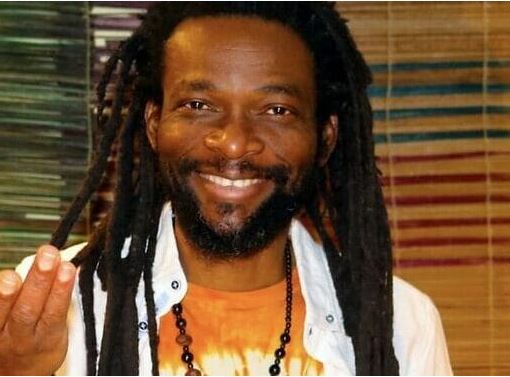
Famed singer, songwriter and band leader, Olusegun Akinlolu also known as Beautiful Nubia has described as imperative the need for Africans to have a revolution of the mind which is crucial to tackling the myriad of problems currently bedeviling them and their continent.
This formed part of the submissions made by Beautiful Nubia during the Toyin Falola Interview Series held via various social media platforms and streamed live to various audiences across the globe on Sunday, March 19, 2023. The interview panel was led by celebrated African historian, Professor Toyin Falola, (who was represented by Adepoju OIuwatoyin), Professor Tunji Azeez, Banning Eyre and Dr Temitope Fagunwa. Azeez is a professor of theatre, film and cultural studies, content developer and director in screen and stage in Africa and Europe; Eyre is an author, producer and guitarist whose work focuses on contemporary music in African disapora and Dr Fagunwa is a Marxist historian whose focus is on African economic history.
While responding to Fagunwa’s question on the relevance of the artiste being revolutionary in his music, Nubia told the gathering that: “When you have an artistic gift, its use is your decision. Sometimes it is not your decision; sometimes it is the environment in which you find yourself that dictates how you would use that gift. But I consciously decided when I was a kid, when I was aware that I had this gift that I am going to use my music to lift my people. Now I call it a tool of mass sensitization. I call some other forms of music tools of mass distraction. I am not trying to insult them. There is music as an art form; there is entertainment as music. Many artistes can choose to use their music to entertain the people. It is one of the functions of art. You can use it to entertain people, teach the people, guide the people or show the people a path to development. What we can say is bad is how you deploy it. Some people come to me and say ‘I believe I am an artist. Can you produce me?’ From what I have heard when such people come is bad music. It is badly produced. If someone has raw talent, even if they are singing off key, even if their pronunciation is very bad, you can hear it and see it.
“When I started out and I took my demo to recording companies, I remember meeting Baba Chris Ajilo who told me that my demo was poorly produced. He told me that I could write songs. He told me that in 1994. He could see my talent even though the demo was not great. Someone can have a bad message but a good art form. It is how you deploy your talents. I consciously chose to use my music in this way. I don’t like to compare and say that what I do is superior to this or to that. What I do is what I do. If I couldn’t play music the way I am doing it, I wouldn’t do it. I was a very comfortable veterinary doctor before I started playing music, even though I was a musician before I became a vet. doctor. At that time, I was 29 years old and I was a millionaire, in Nigeria. You know what that means. My future was very bright. I took all the money I made to start my music. For me, that was the plan. I could have continued with vet. But I wanted to play music for a purpose that was higher than me, bigger than money. For me, music is a tool for opening eyes. It is a tool for helping my society find itself. We are such a lost people. Even the ones who think they know do not know. Even the experts who carry titles in Nigeria do not know. That is the biggest shame of it. Ultimately the greed and selfishness have been the bane of our people for so long.
“I believe in the revolution of the mind. I have described it as a long game. It is like having a house which is falling apart, and some expert comes to say that except you fix the foundation of the house, it would fall. But there are a lot of voices saying that we don’t have time for that. They advise that you keep patching it up. That is what we do every four years as a country. You are patching it up but the root of the problem is not fixed. There are those who think that the only way forward is to restructure Nigeria. There are those who think that by continuous conduct of the elections, we will evolve. But there are people like me who think that we can be doing the two. There is nothing wrong. Let those who want to patch, keep patching. The rest of us who want to play the longer game will do so. The short term game is where you patch it every four years. The real lasting solution is for us to fix the root of the problem.”
Speaking further, Nubia noted that: “We need to change everything about how we think. That is where I am, the revolution of the mind. We must change how people think and we have to start with young children. We will talk to the youths but they don’t often want to listen. But if you come to my shows, you will see them there. They listen to me. The adults, I think, are done for. But we can influence the little kids. I came up with what I got from ancient Yoruba traditions. What is the essence of a human being? What is your purpose here? Make your life a seed that you sow in this blessed earth. Water that seed all the days of your life until it grows into a mighty tree, thereby providing shade and sustenance for those coming after us. How do you achieve that? This is done by embracing Iwa which is the Yoruba code for character. Then there is truth. You must work. You must engage life with courage and bravery. You must have perseverance and patience. You must be humble. There must be contentment. You must teach that to people very early. It is the same way that we indoctrinate people with our religious beliefs that we can indoctrinate our children with these things. You end up with a group of people who are bent on building community over the self. It is not socialism; it is not communism. This is just basic, old African way of thinking which the Yoruba try to practice in those days.”
Commenting on his brand of music and how true he has stayed to this, Nubia noted that he is not carried away by the need to make music which would get awards but rather by ensuring that he fosters the ethos of the Yoruba essence of character and honesty.
“I wanted to play music that would lift my people, which would embolden and heal my people. I am not the only one who tries to do these kinds of things, all over the world. Making money is not the primary motive; it is about getting the message across. When you do this kind of thing, you don’t listen to the noise of the market. Just do what you have to do. There is an audience that is listening to you. I don’t look at the pop music market. That is not what I am into. There are many singers in the US and Canada who do what I do. But you don’t hear about them that much. They are there and they have huge followership. When they go on tour, people come out to watch them. But they are not pop artistes. That is the kind of person I am,” he said.
Disclaimer
Comments expressed here do not reflect the opinions of Vanguard newspapers or any employee thereof.